Bring-Your-Own-Power and the New Reality of Solar Powered Data Centers


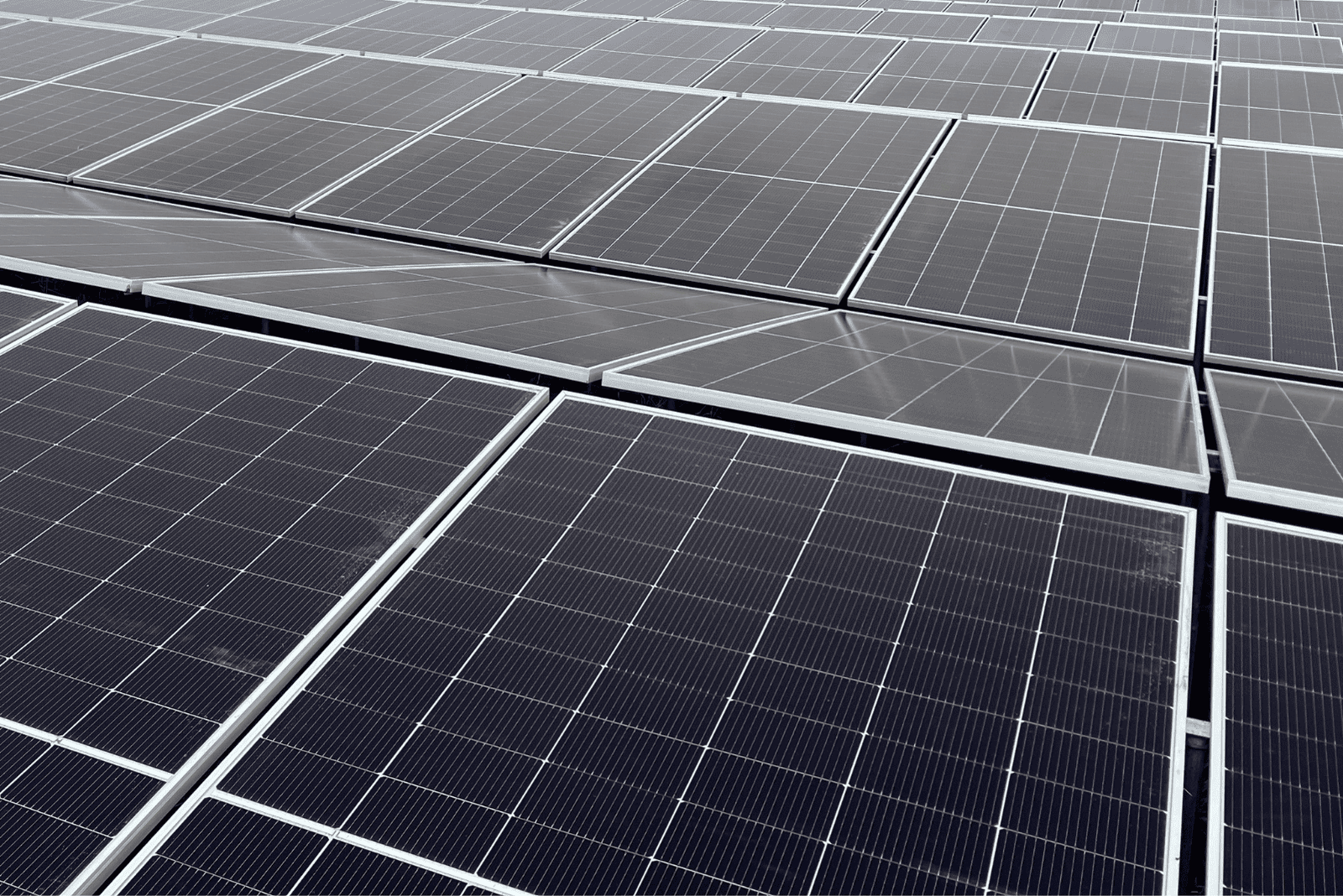
The race to build new data center capacity is not constrained by demand or capital. It is constrained by power.
Across the U.S., developers planning new compute face the same reality: the grid cannot deliver the full capacity on the timelines required. Interconnection queues stretch years, and available capacity often covers only a fraction of the target load.
So teams adapt. They secure what grid power they can and ask a new question: how do we source the remaining megawatts, fast enough, close enough, and with acceptable risk? Hyperscalers are already responding with action. Alphabet acquired Intersect for over $4B; OpenAI and SoftBank invested another $1B into SB Energy; xAI has pursued its own path to on-site power; and Amazon is acquiring gigawatt-scale solar-plus-storage projects still in development.
That question is driving the rise of Bring Your Own Power (BYOP). Solar for data center applications has shifted from a long-term sustainability strategy via PPAs and RECs to an immediate infrastructure requirement.
Once solar enters the solution set, another constraint emerges. The question becomes whether solar can be built fast enough, on the land that actually exists, to keep pace with data center development schedules.
BYOP timelines compress everything downstream of power procurement. Once a site secures partial grid capacity, every remaining step—site control, civil work, equipment delivery, construction, and commissioning—must move faster to avoid delaying the campus as a whole.
Solar as the engine of the system
A viable BYOP strategy is rarely about a single technology. In practice, it’s a coordinated system that combines solar, battery energy storage, and bridge power to meet uptime, cost, and deployment constraints.
Bridge power—often gas-fired—provides firm capacity and the 24/7 reliability required for Tier III/IV operations. Battery energy storage (BESS) manages fast response needs, ramp rates, and short-duration gaps between variable generation and dispatchable supply.
Solar plays a different role; in a well-designed BYOP system, it sets the long-term economics and physical footprint by reducing the cost of delivered energy.
By increasing the renewable fraction of the system, solar directly reduces daily fuel burn from gas assets. While operating costs may not determine the first site decision, they increasingly shape portfolio economics as load grows and domestic gas demand rises alongside LNG export capacity.
At this point, deployment approach becomes decisive. High-density solar that can be built quickly and close to load allows developers to push more energy through the lowest-cost generation layer without expanding land requirements or extending schedules. The result is a BYOP system that is easier to site, faster to build, and less exposed to long-term fuel volatility.
In BYOP systems, solar works best as the engine of the system rather than an add-on that introduces new land, timing, or construction risk.
Why solar powered data centers are stalling in practice
On paper, solar fits BYOP well: predictable costs, no fuel risk, and the ability to scale as load grows. In practice, conventional solar design often introduces schedule risk for data center developers.
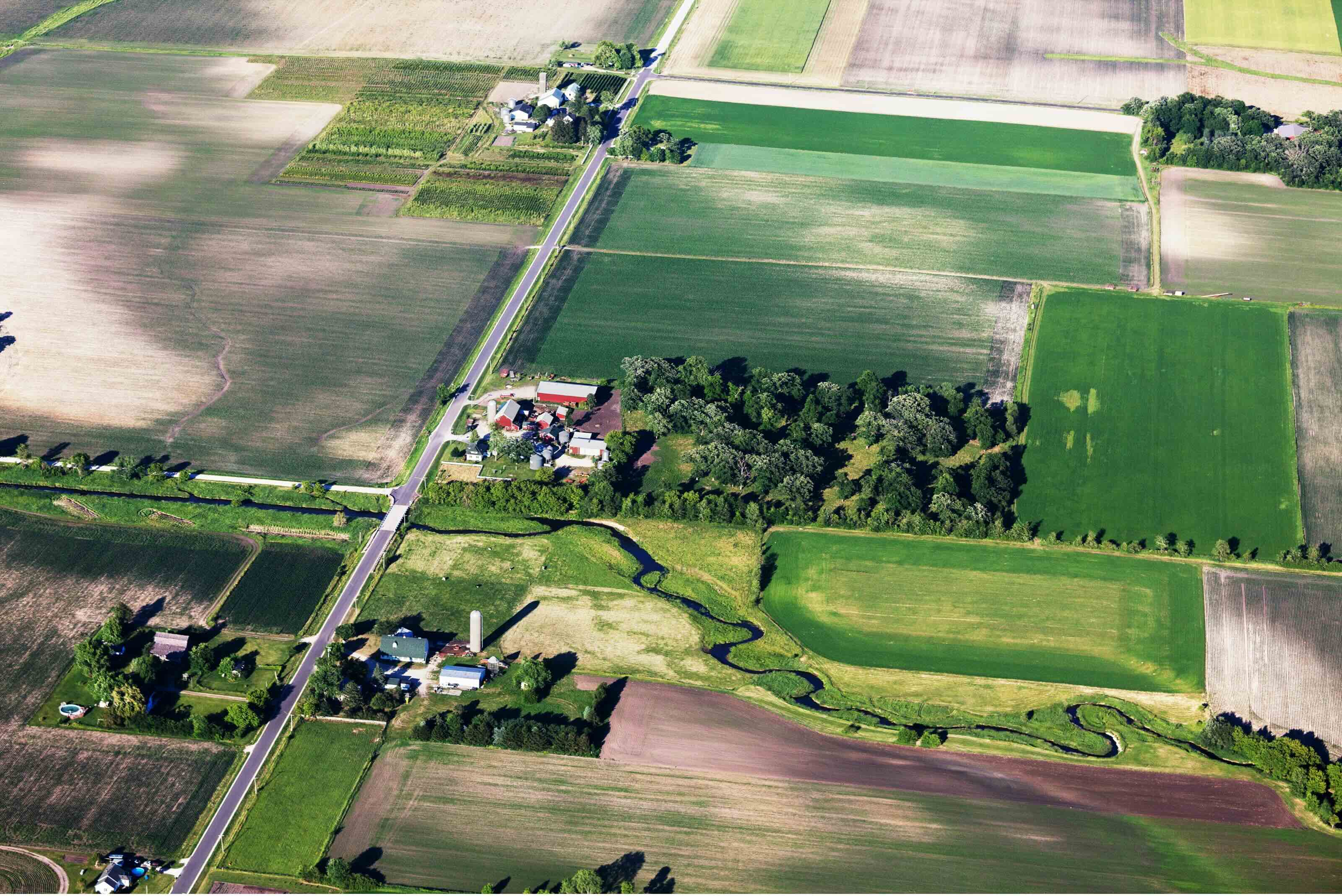
Most conventional solar systems fail BYOP timelines because they were optimized for utility-scale greenfield projects, interconnection queues, and tax equity imperatives that assume flat land, massive contiguous parcels, long construction windows, and predictable civil work. BYOP sites rarely offer these luxuries. Land near data centers is constrained, fragmented, or sloped. Grading adds time. Material quantities drive logistics risk. Large crews are hard to staff in regions already saturated with construction activity. And when schedules compress, these factors compound.
As a result, teams expecting solar to fill a near-term power gap often find that conventional tracker-based systems cannot deliver capacity on the timelines that matter.
Some teams respond by leaning on gas-fired “bridge power” to close the gap. While tactically useful, this introduces two risks. First, the CapEx and lead times for turbines are surging. Second, as domestic demand rises alongside record LNG exports, fuel price volatility becomes increasingly material at scale. Solar increases the fixed-cost share of a BYOP system, reducing long-term exposure to gas price swings across a portfolio.
In practice, land is often the bottleneck. Standard tracker-based systems require lots of land and extensive grading to meet strict slope tolerances. This introduces several common failure modes in a data center timeline:
- Extensive earthwork delays: Moving hundreds of thousands of cubic yards of soil to flatten a site adds months to the schedule and requires environmental permits that are increasingly difficult to secure.
- Weather risk: Once ground is broken for grading, the schedule is at the mercy of the rain. A muddy site stops a conventional tracker installation in its tracks.
- Mechanical and labor complexity: Large quantities of steel and high part counts require massive, specialized crews. In hubs like greater DFW, Northern Virginia, or Columbus, unemployment in the skilled trades is effectively 0%. Competing for the same labor pool as the data center shell itself is a losing battle.
When these delays compound, teams often abandon solar in favor of 100% natural gas-backed bridge power, trading long-term operating exposure for short-term feasibility.
What BYOP-ready solar for data centers actually requires
Supporting a solar powered data center depends on execution. A viable BYOP solar strategy needs to deliver on four fronts:
Speed to power
Projects need a construction approach that minimizes civil scope, reduces steps in the field, and reaches mechanical completion quickly. Months matter when GPUs and cooling infrastructure are already scheduled.
Ability to use the land that exists
Parcels close to load are rarely ideal; slopes, setbacks, and irregular boundaries are the norm. Solar for data center use cases must work on these sites without extensive earthwork.
High energy density that integrates cleanly with on-site storage
When land is scarce, energy per acre becomes decisive. Higher density reduces parcel count, shortens development timelines, and keeps generation physically close to load to integrate with BESS.
Efficient use of scarce labor
Skilled labor is already stretched thin in data center markets. Systems with fewer parts, simpler assembly, and predictable workflows make schedules more reliable.
How Planted changes the equation for solar powered data centers
BYOP changes what “good” solar looks like. Planted was designed around those conditions from the start.
- More viable sites near load
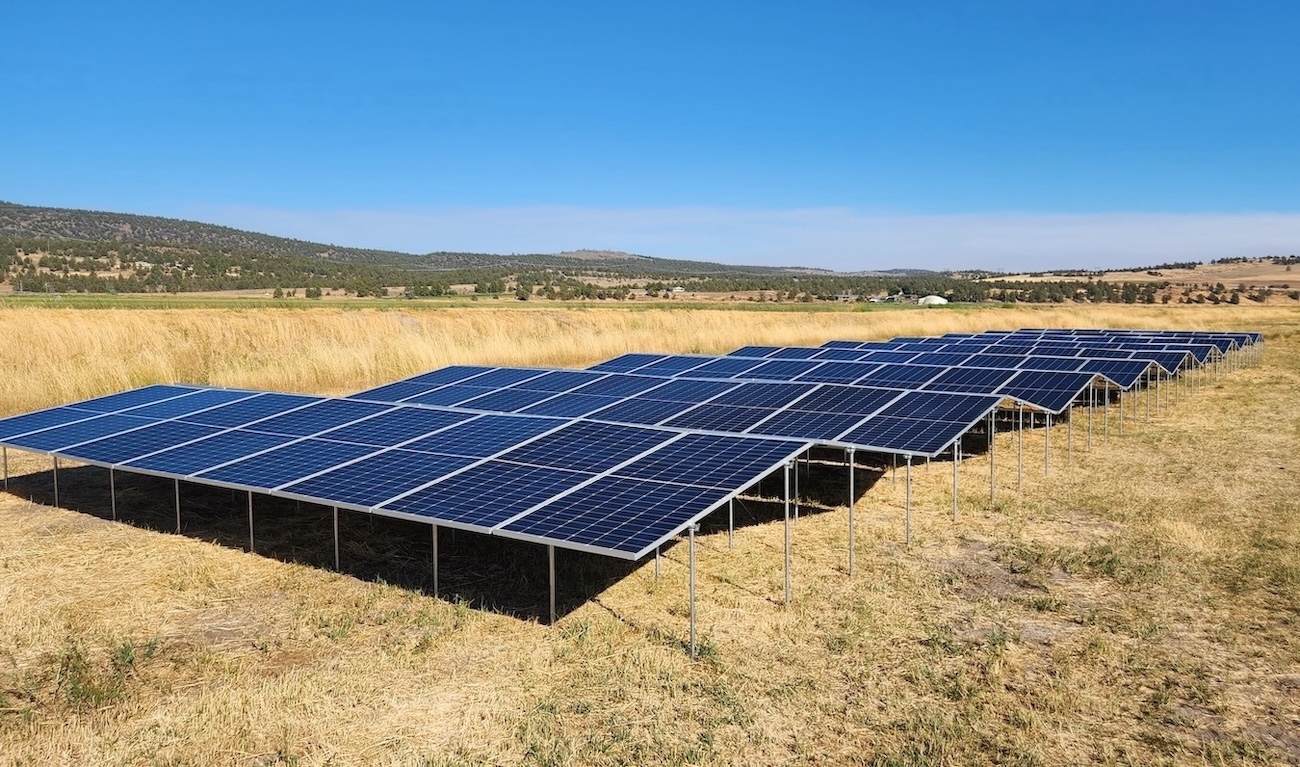
- Terrain-following arrays operate on slopes up to 27% without grading. Irregular or previously dismissed parcels become usable, reducing the need to assemble power from distant sites.
- Higher capacity per acre
- Planted’s high-density layout requires roughly 50% less land per MWh. Developers can deliver meaningful capacity within tight site boundaries.
- Faster installation through simplified, automated construction
- An independent analysis found Planted systems require 90.3 person-hours per MW, compared to 166.6 for conventional trackers. Fewer parts and simpler logistics translate into faster schedules today.
- Lower material and logistics complexity
- With 70% less steel and material handling cut in half, projects face fewer delivery bottlenecks and less site congestion.
- Repeatability across a portfolio
- Vertical integration across software, hardware, and installation enables a standardized build pattern. BYOP solar becomes replicable across multiple data center sites rather than bespoke each time.
Together, these attributes align solar construction with the pace and constraints of modern data center development.
To see how these dynamics play out on a constrained site, we’ve modeled a BYOP scenario for a hyperscaler data center where the original tracker-based design fell short. The proposed layout shows how higher density and terrain-following arrays can materially change outcomes without expanding the footprint.
Explore the proposed BYOP site design →
How developers should evaluate BYOP sites today
For teams sourcing land and power for solar powered data centers, early screening against real construction constraints is essential. The questions below reflect where BYOP projects tend to succeed or stall.
Load, availability, and system configuration
- What level of load is required at the site boundary today, and how does that change over the next five years?
- What interconnection capacity is realistically available in the near term, and what portion of the target load must be self-generated?
- How will bridge power be used as interconnection capacity ramps?
- What renewable fraction (e.g. 60–90%) is required to meet high capacity factor firm MW targets?
- Will the system operate fully grid-connected, partially islanded, or capable of full islanding?
- Firming & hybridization: How does the solar array's output profile integrate with our BESS discharge duration? Can the solar foundation be co-located with BESS pads to minimize trenching?
Land reality
- How many usable acres remain after setbacks, wetlands, floodplains, cultural resources, and geotechnical constraints?
- Can generation be concentrated on one or two parcels near load, or will it require stitching together multiple smaller sites with gen-tie?
- What is the distance-to-load penalty in terms of trenching, losses, permitting, and schedule?
- Does the site require grading to support conventional tracker systems? If so, how much cut and fill is required, and how many weeks does that add?
- At what slope does the business case for conventional trackers break?
- What soil conditions and refusal rates are expected for piling, and is an alternative foundation likely to be required?
Constructability under compressed timelines
- How many days until first electrons reach IT load—not solar COD, but usable power from the full BYOP system?
- What labor density is realistic on site alongside concurrent data center construction?
- What skilled labor is available within commuting distance, given competing data center and infrastructure projects?
Logistics and deployment risk
- How many containers or deliveries must arrive in sequence, and what is the tolerance for slippage?
- How resilient is the construction plan to weather interruptions?
- Where are the major supply chain dependencies for generation and power conversion equipment?
Operating costs and future-proofing
- How exposed is the system to long-term operating cost volatility, particularly under rising natural gas prices in hybrid configurations?
- How well does the design align with the industry’s move toward 800 VDC internal distribution?
- Can the site be repowered or densified without reworking civil scope as load grows?
- What is the 10-year operating cost exposure if natural gas prices rise materially?
Portfolio repeatability
- Can this BYOP approach be replicated across multiple sites, or is it a one-off solution?
- How standardized are civil scope, mechanical assemblies, and commissioning procedures?
- Can cost and schedule be forecast within a tight tolerance across a portfolio?
Answering these questions early reduces downstream risk and clarifies whether solar can meaningfully support BYOP goals.
Why BYOP and smarter solar are converging now
BYOP is forcing a shift in how solar is evaluated for data center power. Generation cost still matters, but buildability matters more. Solar paired with storage, and deployed with buildability in mind, provides a more durable solution on both fronts.
The developers who succeed in this transition will be those who treat rapid solar deployment as a development edge rather than one more piece of the energy problem. Faster installation, better land use, and predictable execution are what allow solar to keep pace with compute.
Planted’s approach to solar for data center deployment reflects that reality. Terrain-following arrays, high energy density, and smarter design make solar viable in places and timelines where it previously fell short.
If you’re evaluating a land-constrained site or looking to increase power output near load, let’s talk.
Or explore a proposed BYOP site design to see how these constraints play out on the ground →
⸻
About Planted Solar
Planted Solar is redefining solar deployment with an integrated hardware and software platform that pairs high-density, terrain-following arrays with automated installation. Planted's smarter, streamlined approach helps developers, EPCs, and IPPs unlock more land, lower costs, and build projects in half the time—delivering stronger project outcomes and accelerating the delivery of abundant energy.
Title - Questions to the client
Lorem ipsum dolor sit amet, consectetur adipiscing elit, sed do eiusmod tempor incididunt ut labore et dolore magna aliqua. Ut enim ad minim veniam